



Trace how the sector became what it is today: its origins, stalwarts, catastrophes and triumphs.
Industry Essentials 5.0
Certificate in Industry Essentials 5.0: Pharmaceutical and Life Sciences
IEPLTM · Pharmaceutical and Life Sciences
How the sector works, what governs it, where its risks sit and how procurement and supply chain create value within it. Free to every member, with a certificate of completion.
Procurement & Supply Chain
Pharmaceutical and Life Sciences
20 Modules
Self paced study
60 Hours
Guided learning time
Free Course
Verifiable digital credential
About the IEPLTM Certification
A grounded understanding of Pharmaceutical and Life Sciences: how the sector operates, how Industry 5.0 is changing it and why supply chain and procurement capability decides whether that change succeeds.
Skills You’ll Build
Explain how the sector actually operates: where the money flows, who the players are and what the rulebook demands.
Describe Industry 5.0 and its three values of human-centricity, resilience and sustainability, and where they have genuinely landed in this sector.
Recognize why supply chain and procurement capability decides whether the sector’s transformation succeeds.
Assess your own organization against the three Industry 5.0 values and its sector risk profile.
See where the SCPMI professional community and its case studies close the sector-depth gap.
Core topics
- Pharmaceutical and Life Sciences Fundamentals and Terminology
- Planning and Demand Management in the Pharmaceutical and Life Sciences Sector
- Sourcing, Supplier Selection and Contract Basics
- Supplier Performance, Risk and Continuity
- Cost, Value and Commercial Decision-Making
- Data, Digital Tools and Professional Judgment
Who this certification is for
For procurement and supply chain professionals working in or moving into pharmaceuticals and life sciences, from those early in their careers who want a structured grounding to experienced practitioners who want to see the whole sector in one place.
No prior qualification is needed. Employers can use it to give a whole team a shared understanding of the sector.
Procurement and Sourcing
Buying active ingredients, excipients, packaging and laboratory services
Supply Chain and Planning
Planning supply against batch release and demand
Supplier Management
Holding contract manufacturers and ingredient suppliers to a standard
Quality and Good Manufacturing Practice
Meeting the rules that govern a regulated plant
Serialization and Cold Chain
Keeping product traceable and in temperature
Clinical and Commercial Supply
Supplying trials and markets at the same time
IEPLTM Curriculum
20 Modules60 guided hours
- 1. Before There Was the Pharmaceutical Industry2. The People Who Built the Pharmaceutical Industry3. The Catastrophe That Wrote the Pharmaceutical Rulebook4. What the Pharmaceutical Industry Got Spectacularly Right5. The Pharmaceutical Industry: Booms, Busts and Absurdities
- 1. Follow the Money in the Pharmaceutical Industry2. The Pharmaceutical Industry From One End to the Other3. The Pharmaceutical Supply Base and Everyone in the Room4. Commercial and Data Norms in the Pharmaceutical Industry5. The Pharmaceutical Rulebook and Its Enforcers
- 1. The People Who Do the Work in the Pharmaceutical Industry2. What Is Industry 5.0, and What Does It Mean for the Pharmaceutical Industry?3. Robots, Algorithms and People in the Pharmaceutical Industry4. What the Machines Are Actually Doing in the Pharmaceutical Industry5. The Bill Arrives: The Pharmaceutical Environmental Account
- 1. Built to Bend: Resilience in the Pharmaceutical Industry2. Who Actually Decides in the Pharmaceutical Industry?3. In the Pharmaceutical Industry, the Chain Is the Business4. What the Pharmaceutical Industry Now Requires, and Why Depth Wins5. An Honest Look at Your Own Pharmaceutical Operation
Four parts, following the journey from raw material to patient through supply chain, sourcing and procurement, with 90 case studies along the way.
Built for Real Pharmaceutical and Life Sciences Work
Case-Based Learning
Real pharmaceutical and life sciences cases, each with its published source, so you see how the decision actually went.
Knowledge Checks
210 checks across the course, asking about the case you just read rather than the definition.
Story-Led Decisions
90 decision points where you make the call first, then see what the organization really did.
Glossary Flashcards
A flashcard set for every module, built from the 152 terms this course defines.
Choose how you Learn
Self Paced Online
Role focusedlearning
Instructor led Training
Learn at yourown pace
Corporate Training
Verifiabledigital certification

Showcase your pharmaceutical Procurement Expertise
Retail demand planning is not humanitarian logistics. Construction procurement is not technology sourcing.
Every industry has its own regulations, supplier markets, risks, technologies and measures of performance. A qualification designed to apply everywhere cannot reflect every industry’s reality.
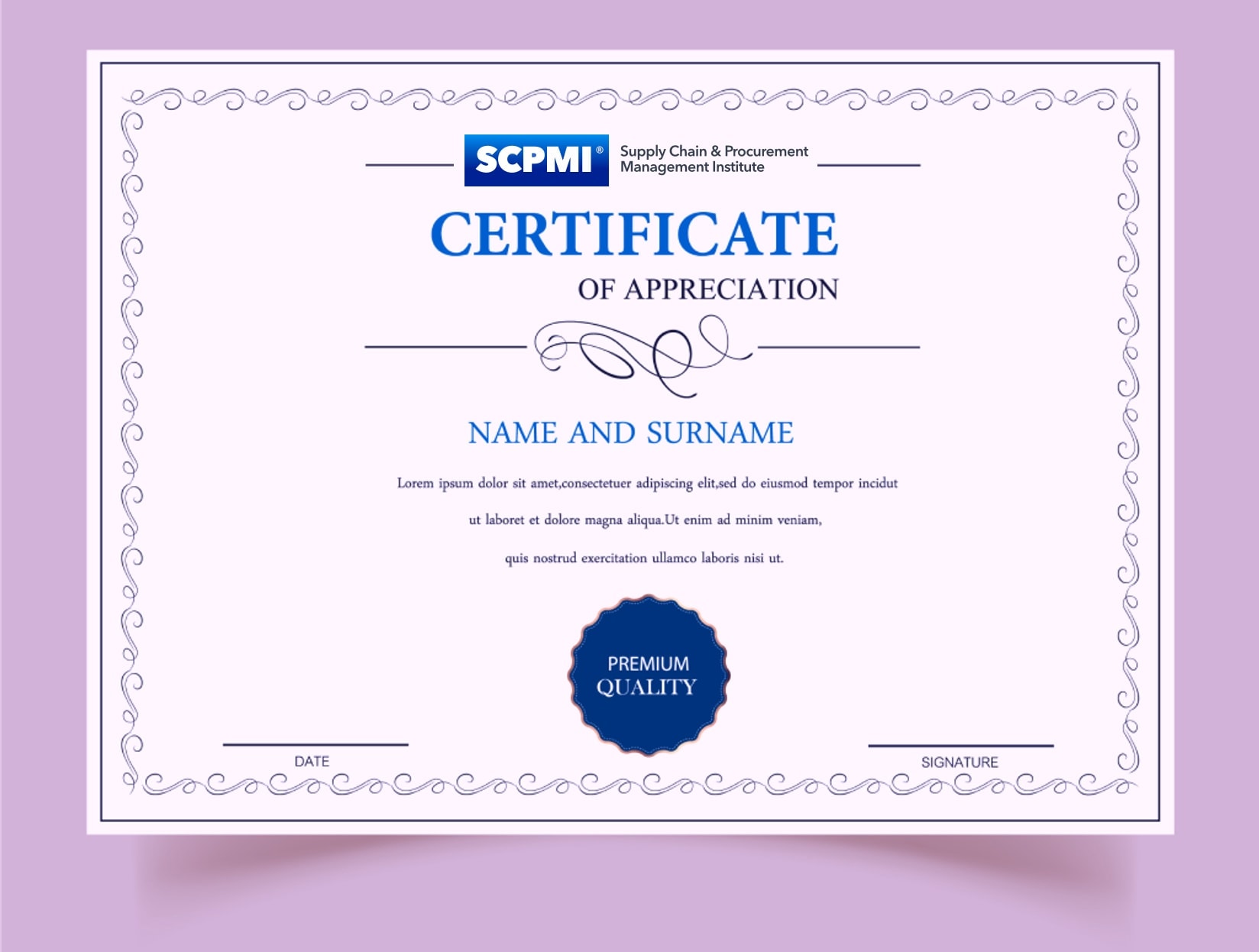
Digital Certificate
Verifiable Credential
Professional recognition
Credential holder profile
Frequently Asked Questions
Everything You Need to Know About the SCPMI Community
Find quick answers about who can join, what you can access and how to participate.
A professional space where supply chain practitioners, leaders, educators and learners connect, exchange knowledge and grow together.
Membership is open to anyone working in or moving towards procurement and supply chain — sourcing and supplier management, planning and operations, quality and regulatory, and healthcare procurement among them.
Holding an SCPMI certification first is not a requirement. Many members join while they are still studying and stay on afterwards.
Discussion spaces organised by industry and by topic, alongside shared resources: professional templates, knowledge checks and worked examples of the kind used throughout the certification.
Members exchange ideas, ask questions and solve real-world supply chain challenges with experienced peers rather than working through them alone.
Each Industry Community gathers members who work in the same sector, so the discussion reflects the regulations, supplier markets and risks that sector actually faces. Pharmaceutical procurement sits within Pharmaceutical & Life Sciences.
Where your work spans more than one sector you can follow several, and the wider community stays open to every member.
Start by introducing yourself and following the industry communities closest to your role. From there, taking part is as simple as answering a question, describing how you handled a problem, or posting one of your own.
Members who want a larger part can contribute resources, help newer members find their footing, or join the sessions SCPMI runs through the year.


Build Specialised Capbility in Pharmaceutical Procurement
Connect with professionals, exchange ideas and
continue growing with SCPMI.
